
Introduction
Enterprises often assume that if SAP is secure and AWS is monitored, compliance is covered.
But here’s the problem:
These systems rarely speak to each other from a compliance perspective.
This creates hidden exposure.
Where Gaps Commonly Exist
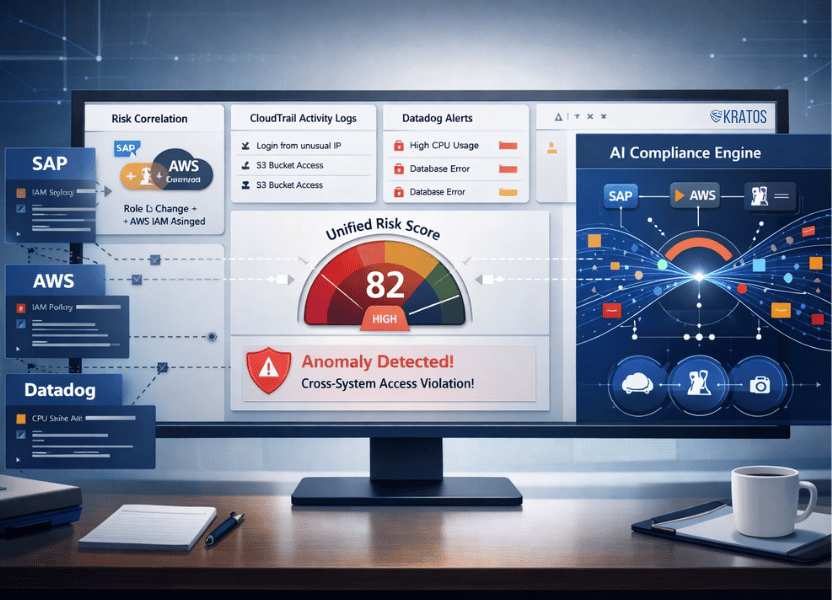
- SAP role changes not reconciled with AWS IAM changes
- CloudTrail logs reviewed separately from ERP logs
- Datadog alerts not linked to governance controls
- Manual review processes across multiple teams
- No unified risk scoring model
Each system may be secure independently —
but compliance requires cross-system intelligence.
Example Scenario
- A user’s SAP role is upgraded
- The same user receives expanded AWS IAM privileges
- A financial document is modified
- Datadog logs show unusual API activity
Individually, none of these may trigger alarms.
Together, they indicate elevated risk.
Without cross-correlation, the organization remains unaware.
Why Observability Alone Isn’t Enough
Datadog provides monitoring and performance visibility.
However, compliance requires:
- Policy mapping
- Risk scoring
- Audit-ready reporting
- Control framework alignment (SOX, internal controls)
Monitoring tells you something happened.
Compliance tells you whether it violates governance policy.
Closing the Gap
A unified compliance layer should:
- Ingest SAP logs
- Monitor AWS CloudTrail events
- Correlate Datadog signals
- Apply AI-based risk models
- Generate automated reports
When systems are unified under one compliance intelligence layer, blind spots disappear.
Final Thought
Enterprise complexity is increasing.
Compliance tools must evolve accordingly.
Disconnected monitoring is no longer enough.